

Tutorial Speakers

Tutorial Speakers

Tapas Roy
IISc Bangalore

Tutorial Title: Evolution of Multilevel Inverter, Its Challenges, Control and Applications

Abstract: Multilevel inverters (MLIs) have emerged as a key technology enabling high-power, high-quality energy conversion for modern applications. This tutorial traces their evolution from conventional Neutral-Point-Clamped, Flying Capacitor, and Cascaded H-Bridge inverters to advanced Modular, Hybrid, and Switched-Capacitor structures. Key design and operational challenges such as voltage balancing, switching redundancy, inrush currents, and scalability will be highlighted. Control strategies including carrier-based PWM, Space Vector PWM, and Finite Control Set Model Predictive Control (FCS-MPC) will be discussed. Applications spanning renewable energy integration, motor drives, transportation electrification, and aerospace will be covered, with insights into emerging trends and research opportunities.

Duration of the Tutorial: 1.5h
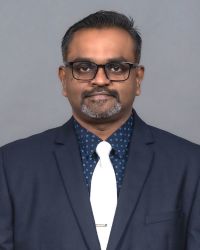
Instructor Biography :Dr. Tapas Roy received his Bachelor’s degree in Electrical Engineering from Jadavpur University, Kolkata, India, in 2009. He then completed his Master’s in Engineering with a focus on Power Electronics and Drives at the Indian Institute of Science (IISc), Bangalore, India, in 2013. In 2023, he earned his Ph.D. from the Indian Institute of Technology (ISM), Dhanbad, India, specializing in novel multilevel inverter topologies. Dr. Roy served as an Assistant Professor at the School of Electrical Engineering, KIIT Deemed to be University, Bhubaneswar, India, from September 2013 to September 2024. With 11 years of experience in teaching and research and 4 years in various university-level administrative roles, he has contributed extensively to the field.

Expertise

He has published several reputed journal and conference papers, with research interests spanning switched-capacitor multilevel inverter topologies, DC–DC converters, pulse-width modulation techniques, and motor drives. For his contributions, he was honored as the “Distinguished Reviewer of 2019” by IEEE Transactions on Industrial Electronics in 2020.

Sivaneasan Bala Krishnan
Singapore Institute of Technology, Singapore

Tutorial Title: Interconnection and Interoperability of Distributed Energy Resources

Abstract: With the rapid integration of distributed energy resources (DERs) such as solar photovoltaics, wind turbines, fuel cells, and battery storage systems into modern power systems, ensuring their safe, reliable, and interoperable interconnection with the grid has become a critical engineering requirement. This tutorial introduces participants to the IEEE 1547 standard, a foundational framework that defines the technical requirements for interconnecting DERs with electric power systems. The tutorial will provide an overview of the key elements of IEEE 1547-2018, including voltage regulation, frequency support, response to abnormal grid conditions, interoperability, and the role of advanced grid-support functionalities. Attendees will learn about the evolution of the standard, its relevance to smart grid architectures, and how it enables effective coordination between DERs and utility operations.

Duration of the Tutorial: 1.5 Hrs
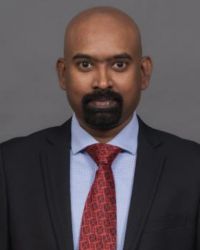
Instructor Biography : Dr Sivaneasan received the B.Eng. and Ph.D. degrees in Electrical and Electronic Engineering from Nanyang Technological University, Singapore, in 2007 and 2012 respectively. Currently, Dr Sivaneasan is an Associate Professor at the Singapore Institute of Technology (SIT). He also concurrently holds the Deputy Director appointment for SIT Teaching and Learning Academy. He is registered as Chartered Engineer with UK Engineering Council. Dr Sivaneasan conducts research and development in the areas of power engineering particularly microgrids, smart grid technologies and electric vehicle management system. In total, he has obtained more than SGD12million in research grant funding and published more than 90 research papers. He also co-authored two scholarly book chapter on Vehicle-to-Grid (V2G) for a book titled “Energy Storage for Smart Grids: Planning and Operation for Renewable and Variable Energy Resources (VERs)” and on Impact of EV Charging for a book titled “Advanced Concepts and Technologies for Electric Vehicles”. His project IPs on condition monitoring has been licensed to EA Technology and Changi Airport Group.

Sivakumar Nadarajan

Singapore Institute of Technology, Singapore


Tutorial Title: Aerospace electrification and condition monitoring

Abstract: The aerospace industry is undergoing a transformative shift toward electrification, driven by the need for enhanced efficiency, reduced emissions, and improved reliability. This tutorial will provide a comprehensive overview of electrification in various aerospace market segments, including commercial aviation, and urban air mobility. It will cover the current landscape and future trends, focusing on developments in hybrid and fully electric aircraft. As electrical systems become more integral to flight-critical operations, the need for robust condition monitoring becomes paramount to ensure safety, optimize maintenance, and extend the life of components.

This tutorial will highlight the critical role of condition monitoring in electrified aerospace systems, with a focus on electric machines and power electronic converters. Techniques such as model-based diagnostics, signal processing, machine learning, and sensor fusion will be discussed in detail. Practical implementations and the effectiveness of these approaches in early fault detection and failure prediction. Attendees will gain insights of condition monitoring systems for aerospace applications, key challenges in real-time monitoring, and strategies for integration into aircraft health management systems.

Duration of the Tutorial: 1.5 Hrs
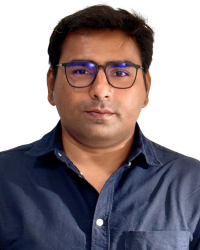
Instructor Biography : Sivakumar Nadarajan (S’12–M’16-SM’24) received the B.Tech. degree in electrical and electronics engineering and the M.Tech. degree in electrical drives and controls from Pondicherry Engineering College, Pondicherry, India, and the Ph.D. degree in electrical engineering from the National University of Singapore, Singapore. He has accumulated around 20 years of industrial experiences from aerospace, marine, automotive, and other industrial sectors. From 2009 to 2024, he was with Rolls-Royce Singapore Pte. Ltd., Singapore, as a technical manager and Head of CoE – Electrical equipment heath monitoring. Since July 2024, he has been working as an Associate Professor in the department of electrical engineering at Singapore Institute of Technology, Singapore.

Dr. Nadarajan has filed 40 patents in USA and Europe and published over 50 research papers in international journals and conferences. He is a certified chartered engineer by Institute of Engineering and Technology (IET), UK. He also recognized with various awards for his innovation and technology development, including the 2023 ASEAN outstanding engineering achievement award from AFEO, the 2023 IES prestigious engineering award from IES, Singapore, and also received the Sir Henry Royce awards for innovation and engineering excellence from Rolls-Royce Plc. His current research interests include condition monitoring, marine EV charging, failure prognosis, electrical machine, electric drives, power electronics, and machines modelling.

Nishant Kumar
IIT Jodhpur, India

Tutorial Title:  AI-based Advanced Control Technique for Grid Integrated Inverters and Digital Twin Approach for Component Health & Performance Monitoring

Abstract: Dr. Nishant Kumar, FIETE and SMIEEE, is an Assistant Professor in the Department of Electrical Engineering at the Indian Institute of Technology Jodhpur. He is the principal in charge of the Energy Management and Microgrid Laboratory (EMML) there. His research focuses on renewable energy systems, power electronics, and electric vehicle technologies. He earned his Ph.D. in Electrical Engineering from the Indian Institute of Technology Delhi, where he received the Best Thesis Award in 2019. Earlier, he completed his M.Tech. at the National Institute of Technology Durgapur with a Gold Medal and his B.Tech. at the Silicon Institute of Technology Bhubaneswar with the Best Technical Student Award. He later pursued postdoctoral research at the National University of Singapore, contributing to a university supported startup.

Duration of the Tutorial: 1.5 Hrs

Instructor Biography :Dr. Kumar has an outstanding record of more than 120 publications, including over 40 in IEEE Transactions journals. He holds 6 granted Indian patents and has filed one in the United States. He is also the Co-founder and Chief Technology Officer of SCPscan Pvt. Ltd., which develops advanced energy technologies. His achievements have been recognized globally with honors such as the Young Researcher and Research Excellence Awards at IIT Jodhpur in 2024, the Global Distinguished Young Scientist Award at IEEE GlobConHT in the Maldives in 2023, and the IEEE IAS Best Ph.D. Thesis Award in 2020. He has been listed among the World’s Top 2 Percent of Scientists by Stanford University. Dr. Kumar serves as Associate Editor of IEEE Transactions on Circuits and Systems I and is actively engaged in professional bodies including IEEE, ISTE, INYAS, and IETE. He leads funded projects in AI driven digital twins, solar energy integration, and electric vehicle charging infrastructure, while mentoring doctoral researchers. His international collaborations span institutions such as MIT, Imperial College London, the University of Warwick, and the University of Lille.